Establishing Product & Design Process @ Cube
The heart of any successful team beats to the rhythm of simple, adaptable, and transparent processes. It's like walking a tightrope between structure and flexibility, ensuring everyone stays on track while embracing creativity.
In my role as the Operations Manager of the PnT org Cube, I've set up straightforward guidelines for how we tackle roadmap planning, project deliveries, and documenting decisions along the way.
As the pioneer of the Product Design Team at Cube, I've established guardrails to help us move creatively in the right direction through flexible guidelines for approaching design at Cube and utilizing the tools of our craft.
-
Leadership & Process
-
Cube Software
-
Fin-tech
-
Operations Manager
Product Design Leader
-
Ongoing
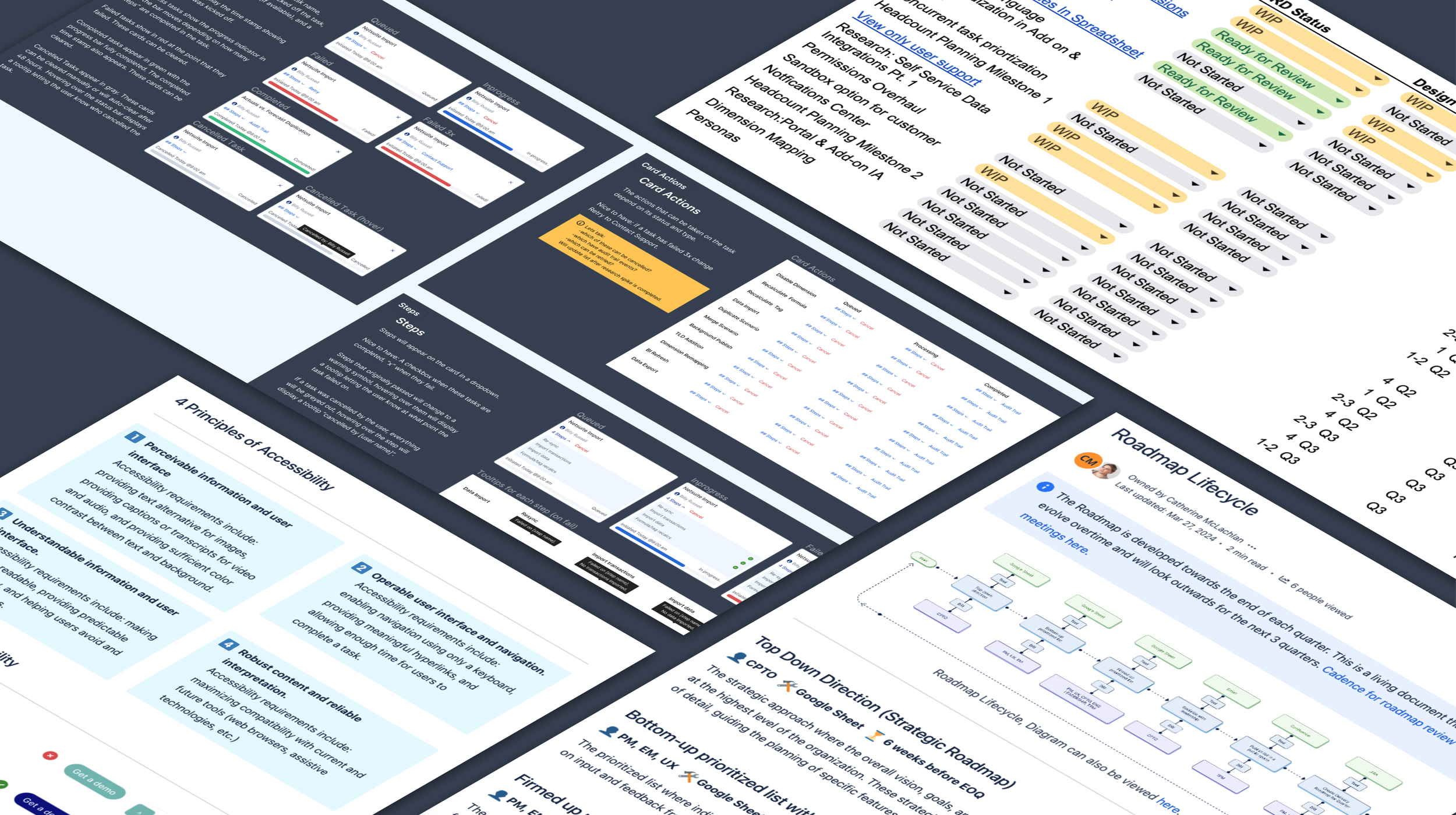
PnT Process
Creating consistency across teams.
-
Roadmap planning is essential for organizational success, as it aligns teams, clarifies objectives, optimizes resource allocation, mitigates risks, facilitates communication, and enables adaptability in goal achievement.
Recognizing that Cube's planning process was flawed, we acknowledged the need for a strategic shift. Instead of a tactical focus, we aimed for a strategic approach to roadmap planning, setting the tone for the entire business direction.
Collaborating closely with the CPTO, I revamped the roadmap planning process, adopting a dual approach: starting from a top-down perspective, then diving into specifics from the bottom-up. This ensured alignment between business objectives and customer needs, paving the way for more effective planning and execution.
-
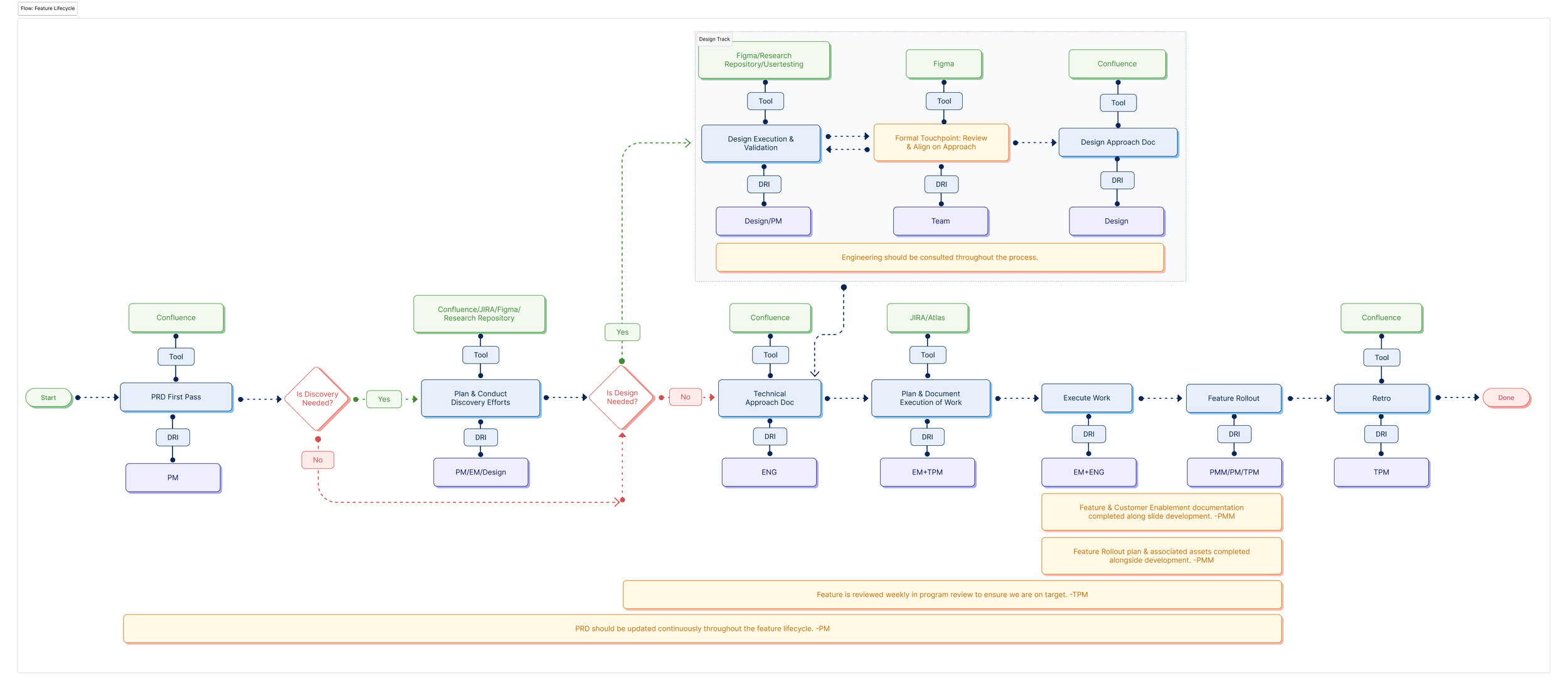
Cube's scrum teams lacked consistency in their processes for feature and project delivery, often resulting in gaps, missed requirements, delays, and a lack of transparency regarding project statuses across the business.
To address this issue, I collaborated with the CPTO, Engineering Leadership, and Product Marketing to devise a streamlined process for project delivery, complete with DRIs, aimed at ensuring consistency and enhancing transparency.
-
At Cube, establishing a unified repository of project information was paramount. We required a comprehensive historical archive to monitor decision-making processes, research outcomes, design strategies, technical methodologies, and release schedules.
Collaborating closely with Product Managers, Engineering Managers, Product Marketing <anagers, and our Chief Product and Technology Officer (CPTO), I spearheaded the development of a streamlined template. This template ensured that our single source of truth was not only easily understandable but also consistently implemented across all projects.
Design Process
Empowering designers to navigate forward creatively.
-
Flexible guidelines are crucial for nurturing creativity within teams. They provide a framework for consistency while allowing room for innovation and adaptation to changing circumstances. With flexible guidelines, teams can explore new ideas, take calculated risks, and push boundaries to achieve innovative solutions.
I developed a structured yet adaptable approach to the design process at Cube, encompassing guiding design principles and methodologies tailored to our unique needs.
This comprehensive process outlines guidelines for planning, fostering collaboration among team members, conducting thorough research and discovery initiatives, engaging in UX exercises, defining expected deliverables, crafting mockups and prototypes, and validating concepts.
-
I collaborated closely with both engineers and product managers to address their pain points regarding the use of Figma.
Engineers expressed difficulty in navigating Figma files and pinpointing what was relevant to the specific ticket they were working on.
Product Managers encountered challenges in exploring design options without causing confusion for engineers and struggled to understand the overall state of a given file or project.
To address these issues, we implemented a two-fold filing system. One Figma file was designated for design exploration, where we brainstormed and explored possibilities. Another file served as the engineering source of truth, meticulously organized by EPIC, with each page breaking down designs by story.
This approach led to reduced back-and-forth communication between engineers and designers during the development phase and fewer issues identified during design reviews, thanks to enhanced clarity.
Additionally, all files were color-coded and provided with a cover, allowing instant visual understanding of the project's progress directly within Figma.
-
I created a JIRA project for Design & Discovery that is linked to our CUBE Engineering project in JIRA.
All Design & Discovery work is planned and tracked utilizing this board.
-
A well-defined handoff process is crucial for facilitating a seamless transition and minimizing unnecessary back-and-forth during the project's transition into the development phase.
In order to guarantee this smooth transition, I developed adaptable guidelines for organizing files and preparing stories for implementation. These guidelines encompass determining when a design review is necessary and establishing a structured format for design notes.
-
We observed a recurring problem wherein design requirements were being overlooked, resulting in disparity between what was being designed and what was being shipped.
Acknowledging the diverse viewpoints among designers, QA professionals, and engineers, and recognizing the possibility for diligent QA personnel to overlook design-implementation inconsistencies, I proactively engaged in discussions with both the engineering and QA teams. The objective was to gain insight into their unique challenges and collaboratively identify the most effective juncture to incorporate a design review process into our workflow.
Subsequently, I developed a straightforward checklist for our design team to utilize during their reviews. This checklist serves as a structured guide to assist designers in identifying and addressing any inconsistencies, facilitating smooth evaluations moving forward.
-
Continuous engagement with users is vital for any product's success. Previously, our customer outreach process was reactive, primarily reaching out during targeted research initiatives.
Recognizing the importance of ongoing interaction, I collaborated with stakeholders to put some framework around our customer outreach process. These revised guidelines ensure continuous interaction at every stage of the customer lifecycle, fostering stronger connections and insights.
-
Design Heuristics:
I developed concise guidelines to aid my team in evaluating existing functionalities against industry-standard heuristics.Accessibility Basics:
At Cube, we prioritize product usability for all users as a fundamental aspect of our design ethos. To support this commitment, I compiled a straightforward guide on accessibility fundamentals, supplemented with links to WCAG documentation for further learning. Additionally, I implemented tools to facilitate accessibility evaluations at every stage of the feature lifecycle.Estimating:
Strategic planning often entails navigating through uncertainties. To enhance our team's ability to map out project delivery timelines effectively, I crafted guidelines for estimating Level of Effort (LOE). These guidelines were informed by empirical data from previous projects and consideration of the team's competencies and capacities.
Check out some of Cubes Design Resources here.

Cubes Design Principles
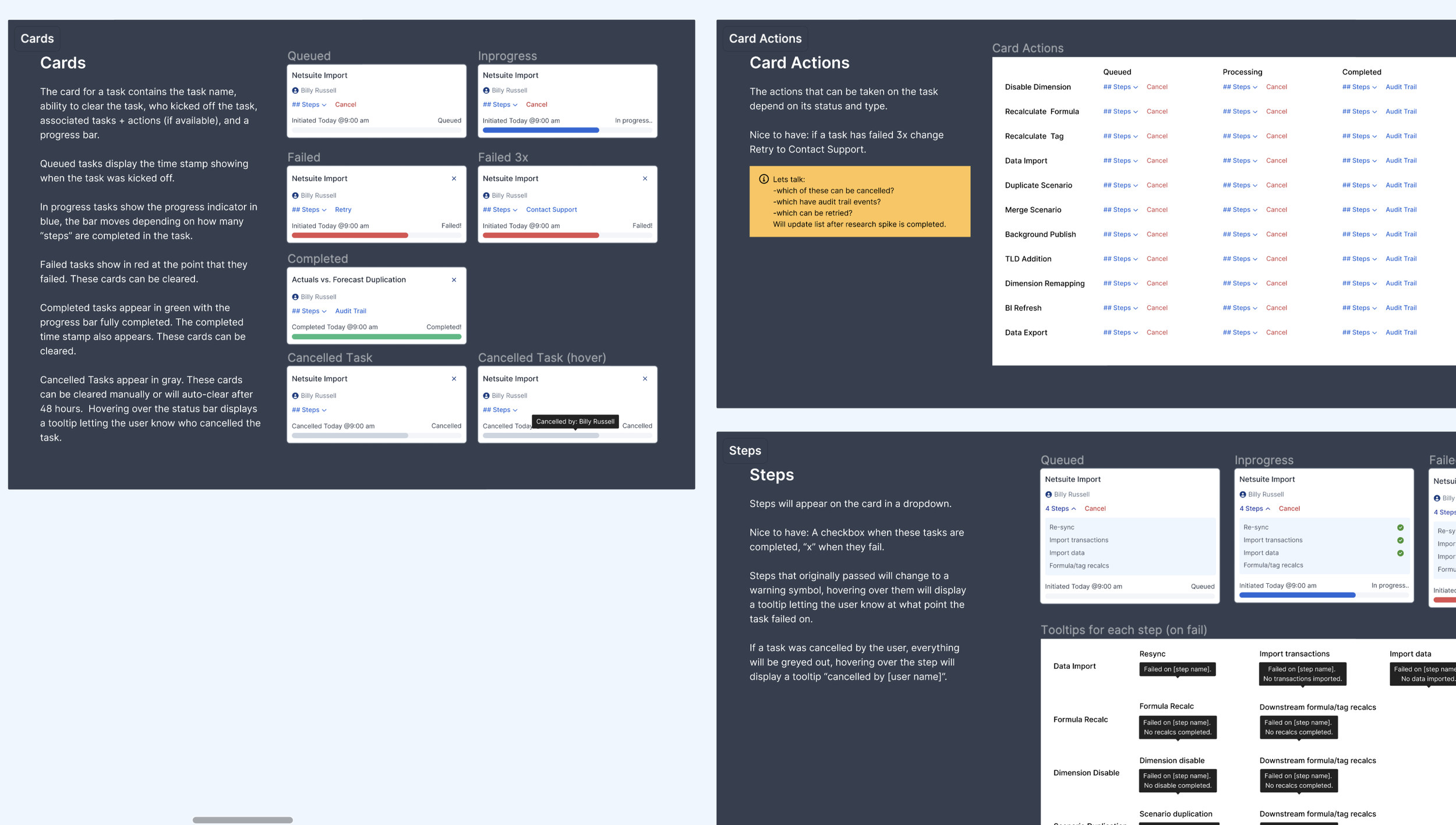
Example level of detail expected in a design hand-off file.
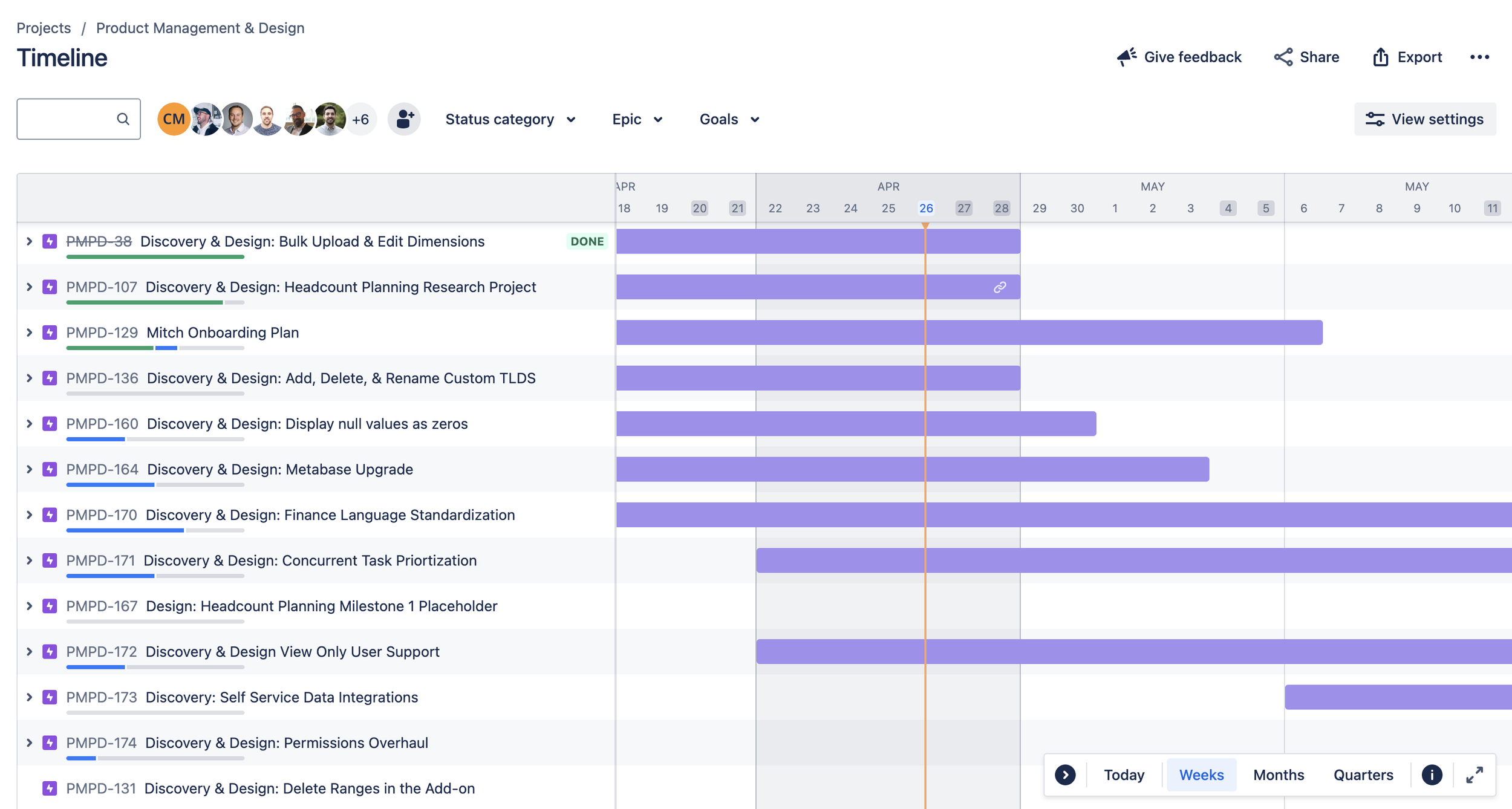
Product & Design Project Tracking