Hiring, Onboarding, & Levelling up Designers at Cube
As you embark on the journey of expanding your team, the significance of making successful hires cannot be overstated. Equally crucial is the task of orchestrating a seamless transition for new team members, ensuring they are equipped with the tools and guidance necessary for their advancement within the organization.
As the foundational design hire at Cube, I crafted a tailored hiring strategy, ensuring our team gained the essential insights required for making optimal hires.
I also implemented a comprehensive 90-day templatized onboarding plan to ensure both scalability and the success of new hires. Lastly, I crafted detailed role descriptions and established a leveling-up matrix, empowering our design team with clarity and a structured path for advancement within the organization.
-
Process Design
-
Cube Software
-
Fin-tech
-
Design Leadership
-
1 month
Hiring Process
Getting the data needed to make a smart hire.
-
Frequently in this industry, we encounter extensive interview procedures spanning 4-6 weeks. Such prolonged processes risk losing exceptional candidates to other offers. My aim with Cubes' hiring approach was to condense the timeline to just 2 weeks, while ensuring we gleaned the necessary insights for informed hiring decisions. To achieve this, I introduced a streamlined 3-step technical evaluation process:
Hiring Manager Screen
Portfolio Review
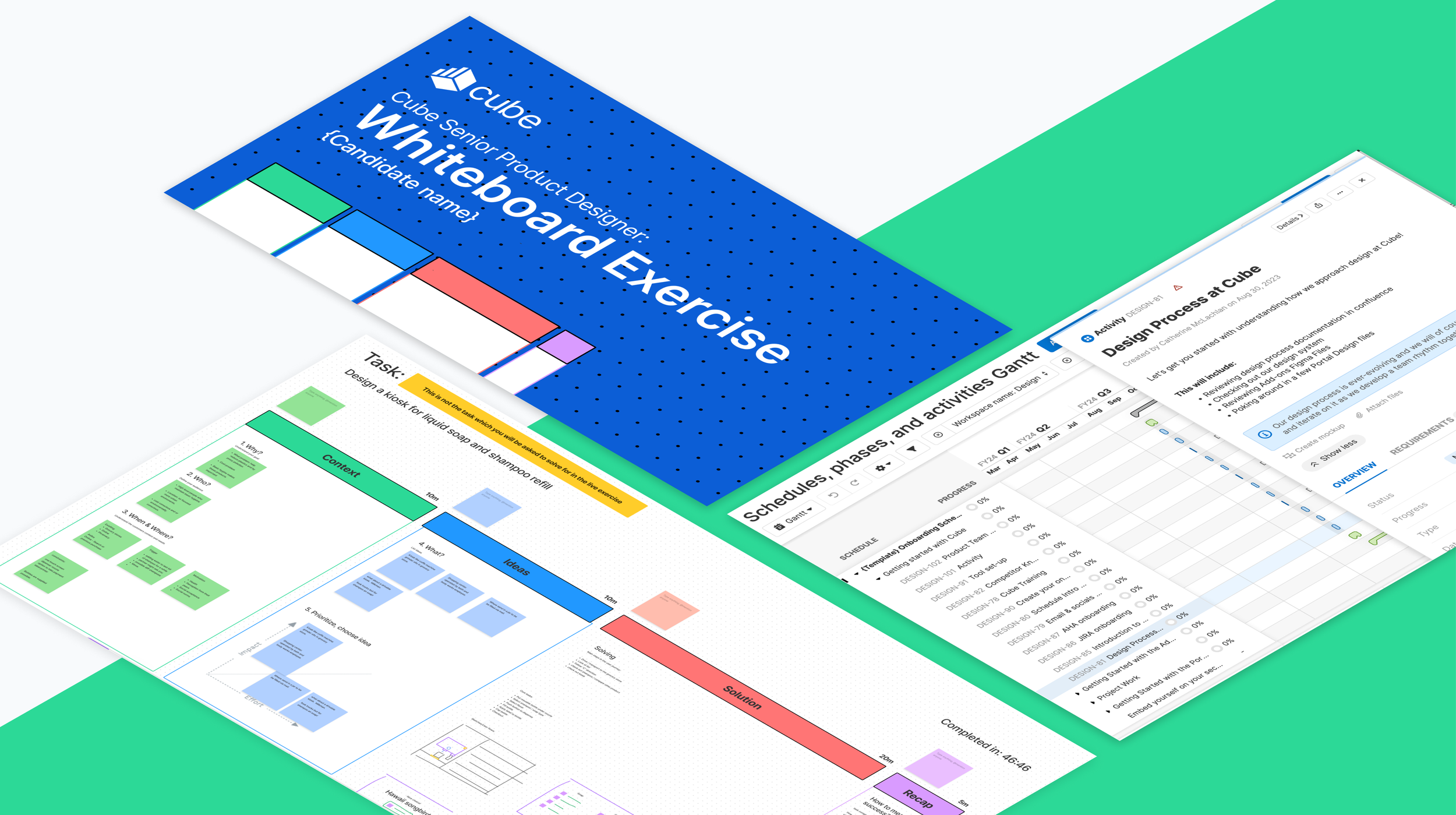
Live Whiteboarding Exercise.
To guarantee an equitable assessment of candidates and to position them for success throughout the process, I ensured transparency by clearly outlining expectations for each stage. Additionally, I equipped all interviewers with a comprehensive scoring rubric to promote fairness in candidate evaluation.
-
The initial phase of the technical evaluation for a design position at Cube involves a 45-minute hiring manager screen. During this interview, my objective is to delve deeper into the candidate's background, motivations for seeking employment, and their approach to design, planning, and conflict resolution.
For a glimpse into the types of questions I typically pose during interviews with Senior Design candidates, feel free to review a sample set here.
-
The portfolio review comprises a 30-minute panel-style interview with members of our product team, consisting of a product manager, a front-end developer, and the head of design. During this session, the candidate is allocated 10-15 minutes to present a selected piece from their portfolio.
The panel evaluates the presentation based on various criteria including:
Planning & research
UX design & methodologies
UI, visual, & interaction design
Design rationale
Business impact
Learnings
Following the presentation, the panel engages in a 15-minute period for follow-up questions pertaining to the showcased work.
All candidates are assessed using a comprehensive scoring rubric linked to the aforementioned criteria, accessible here.
The primary objective of this segment of the interview is to gauge the candidate's ability to articulate and present their work effectively and succinctly.
-
Gaining the insights necessary for your team can be difficult with a take-home design exercise. Some candidates may invest an extensive amount of time refining their submissions, while others might limit themselves to a specific timeframe. Consequently, you risk making an inaccurate hiring decision if one candidate devotes substantially more time to the challenge, making their outcome appear superior.
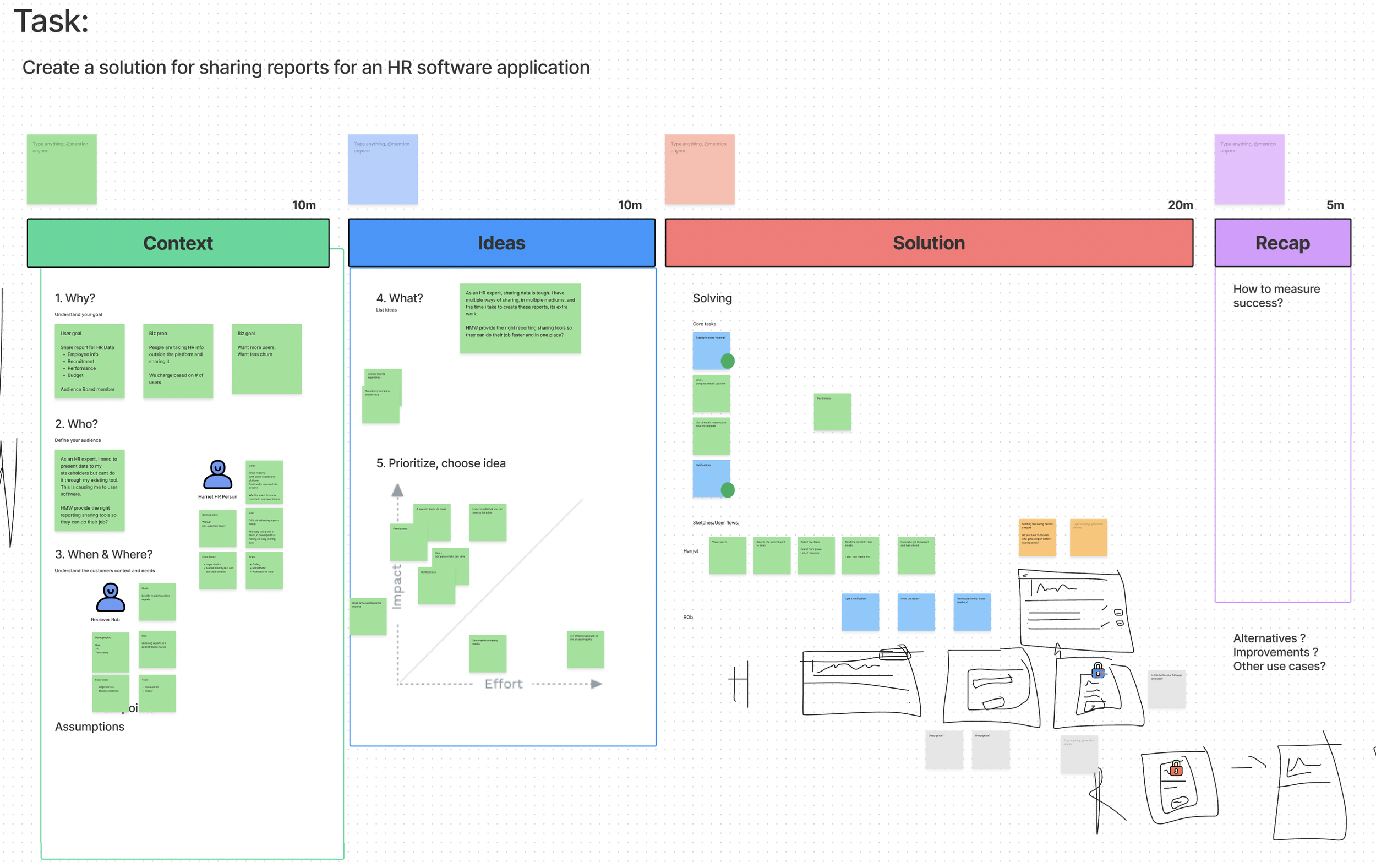
My objective with the whiteboarding exercise is to assess a candidate's problem-solving ability within a defined timeframe. This approach ensures a fair evaluation and focuses on the candidate's real-time problem-solving skills.
Candidates receive access to a shared Figjam file several days before the exercise. Once the exercise begins, they are presented with a specific scenario to solve. Internal participants are briefed on the scenario's outline and their roles, setting them up for success as subject matter experts (SMEs) and fostering interaction with the candidate.
Throughout the 45-minute exercise, candidates work on the given scenario, leveraging the provided Figjam file and engaging with internal participants to gather insights. Following the exercise, candidates have the opportunity to present any additional rationale, while our team can pose additional questions.
Please refer to the sample assets below for a deeper understanding of this process:
Onboarding & Levelling
Success at scale.
-
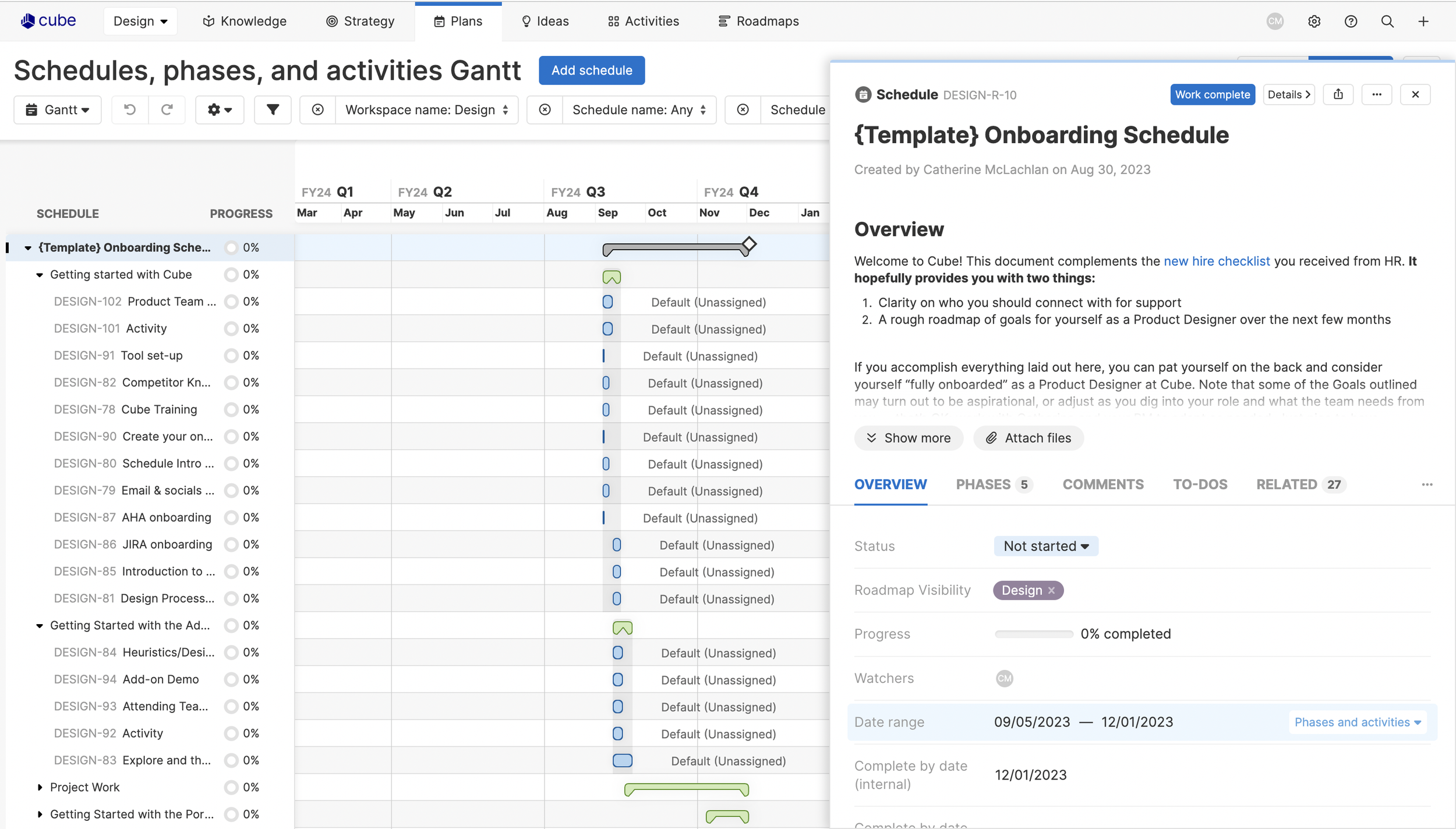
Ensuring new hires grasp the keys to success in their roles is crucial. To achieve this, I meticulously devised a 90-day onboarding plan aimed at guaranteeing their success. Moreover, I streamlined this onboarding process by creating a template in Aha, enabling hires to familiarize themselves with our project management software seamlessly during their onboarding journey. Should you wish to delve into the specifics of the plan, please don't hesitate to reach out.
Below, I've provided a concise overview for your reference:
As a Senior Product Designer at Cube, you will get hands-on right away. We learn by doing.
In your first week at Cube,
You’ll get fully embedded into your technical teams, and start familiarizing yourself with their culture.
You’ll also learn about the general FP&A landscape to gain empathy for our end user.
Your manager will begin to mentor you on our internal process and ramp you up with technical tools. You’ll also have a technical buddy from the Engineering/Product team to help guide you through our product and introduce you to our features.
By day 30:
Expect to spend your time familiarizing yourself with Cube's products and features and how we conduct design at Cube.
In parallel, you will work closely with your PMs to plan your first project!
By day 60 day:
You will focus on delivering your first project. Expect to conduct research, design UX/UI elements, and gather iterative feedback.
You'll also start to take greater ownership of your team's design responsibilities.
By day 90:
You’ll take full ownership and accountability of your team’s design needs.
You’ll be responsible for the quality of projects that are in flight and work with your PMs to identify opportunities to improve the overall user experience of the features you will be working on.
You will have shipped design on at least 2 projects.
-
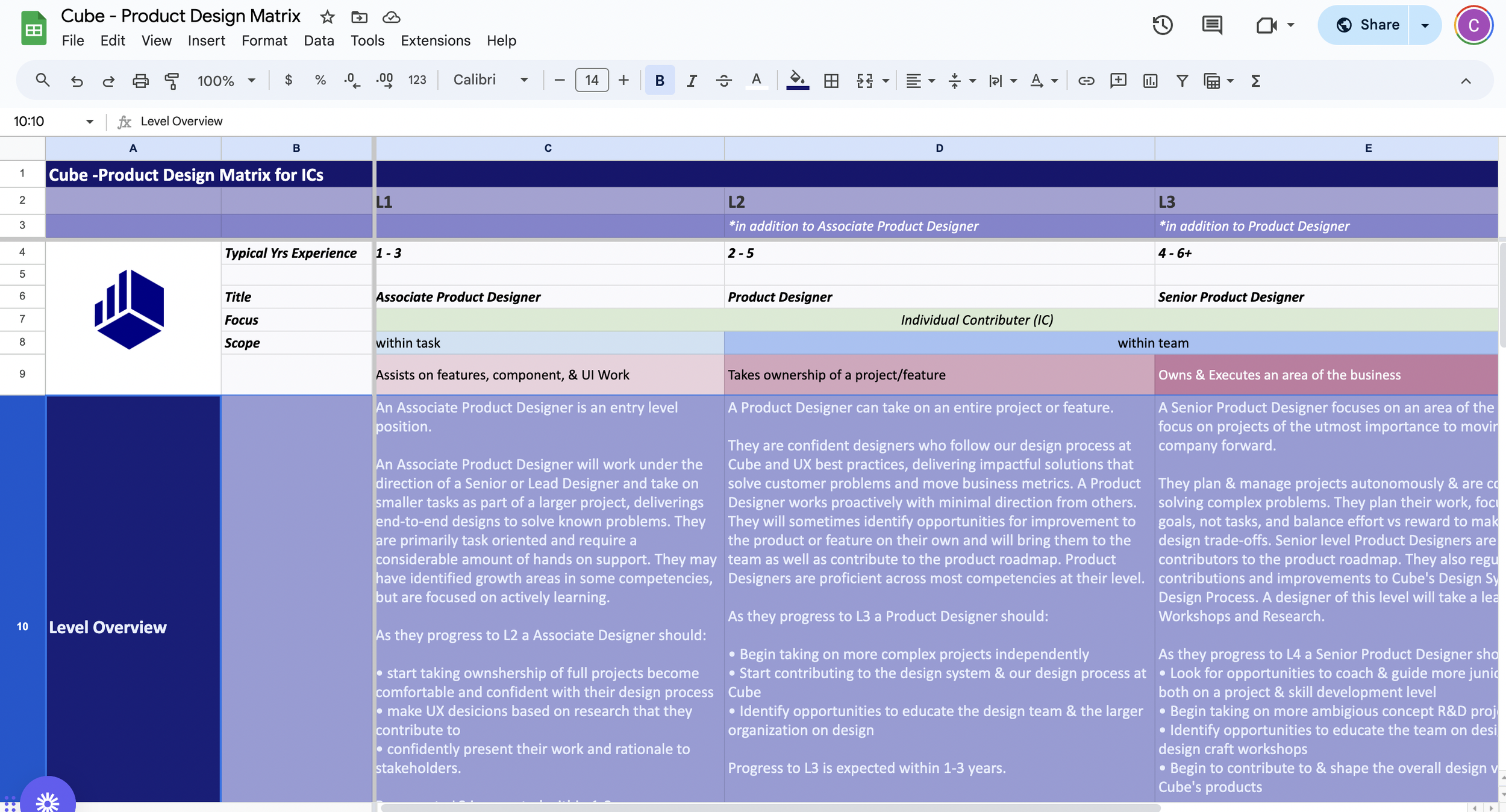
Central to any team's success is the empowerment of its members to thrive. To facilitate this, I devised a comprehensive career matrix, enabling my team members to ascertain their current competency levels and identify collective areas for growth to progress to the next level.
Feel free to explore the Product Design Career Matrix I developed here.
Onboarding template
Career Matrix